FRACTALES
HUMANOS
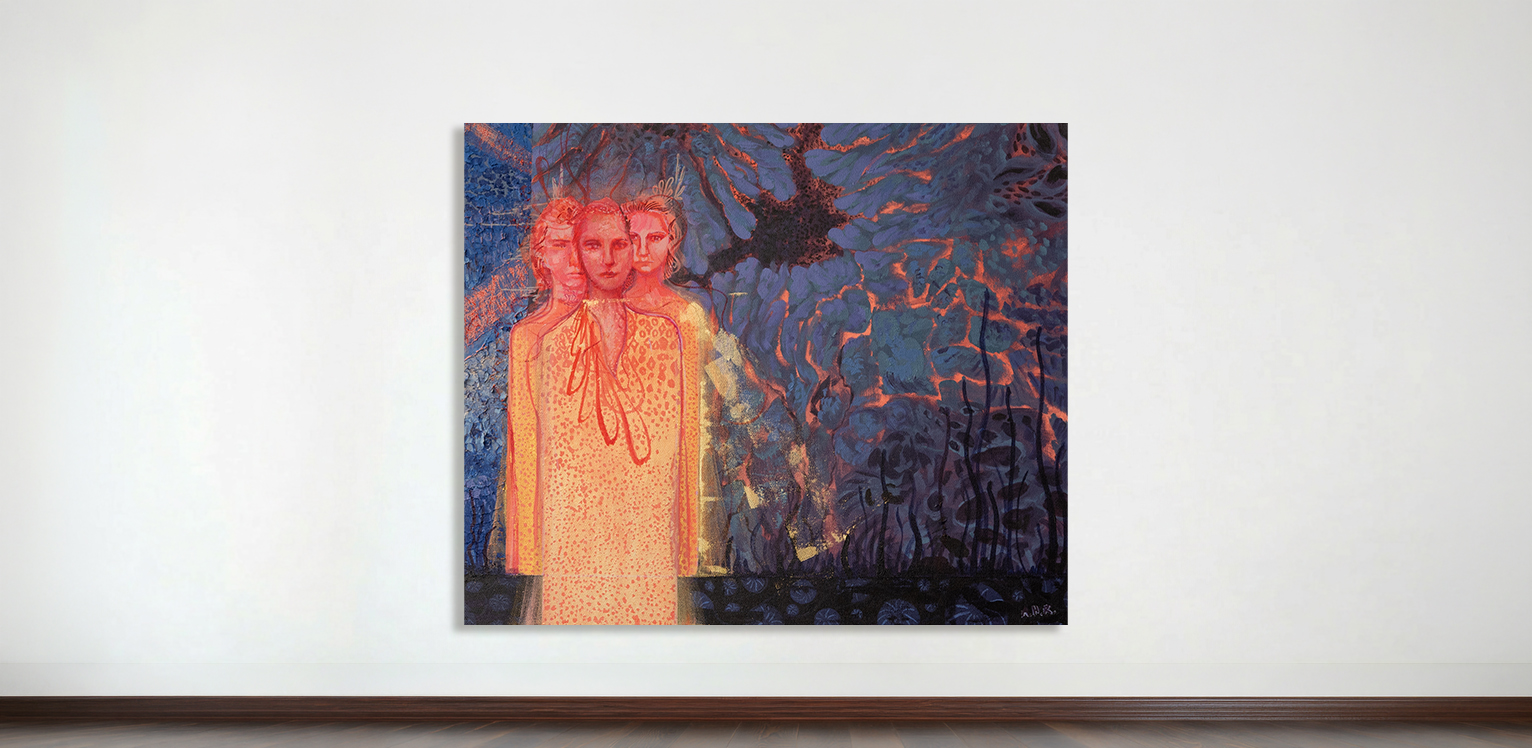
The ways in which repetition shapes human experience. We often inhabit loops that lead us, time and again, to the same places. In pieces such as Portales or Autoretrato, time appears fragmented: past, present, and future coexist on the same plane, reminding us that change is the only constant.
Human figures are shown in transformation, like fractals that repeat and expand, revealing both hidden and visible facets of identity. Works like Renovación introduce family memory and ancestral connection, while backgrounds inspired by nature, branches, lichens, organic forms, reinforce the idea that we are also part of a larger fabric, where the personal intertwines with the universal.
Fractales Humanos invites us to see humanity as a living pattern: a network of cycles, changes, and connections that remind us nothing remains static, and that everything is part of a shared.
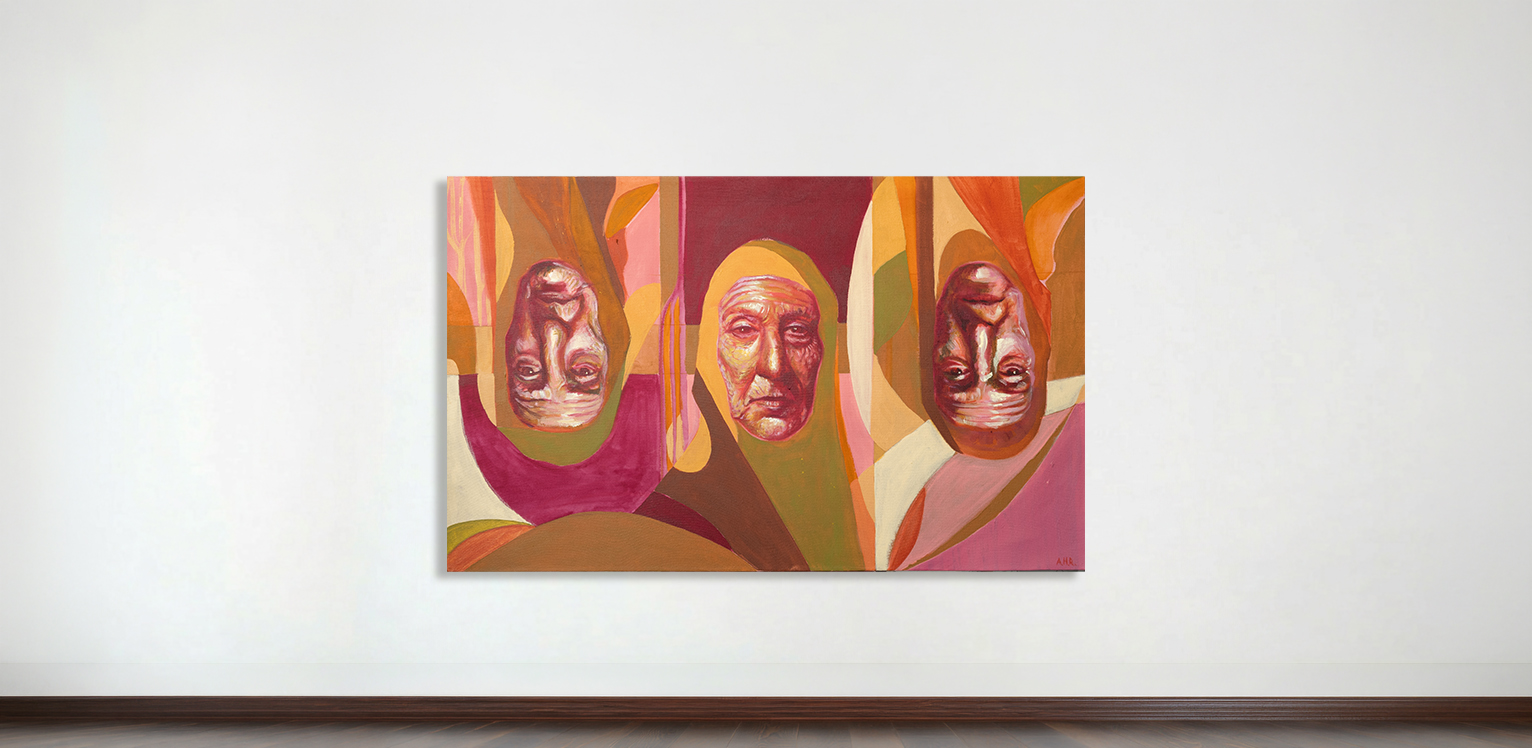
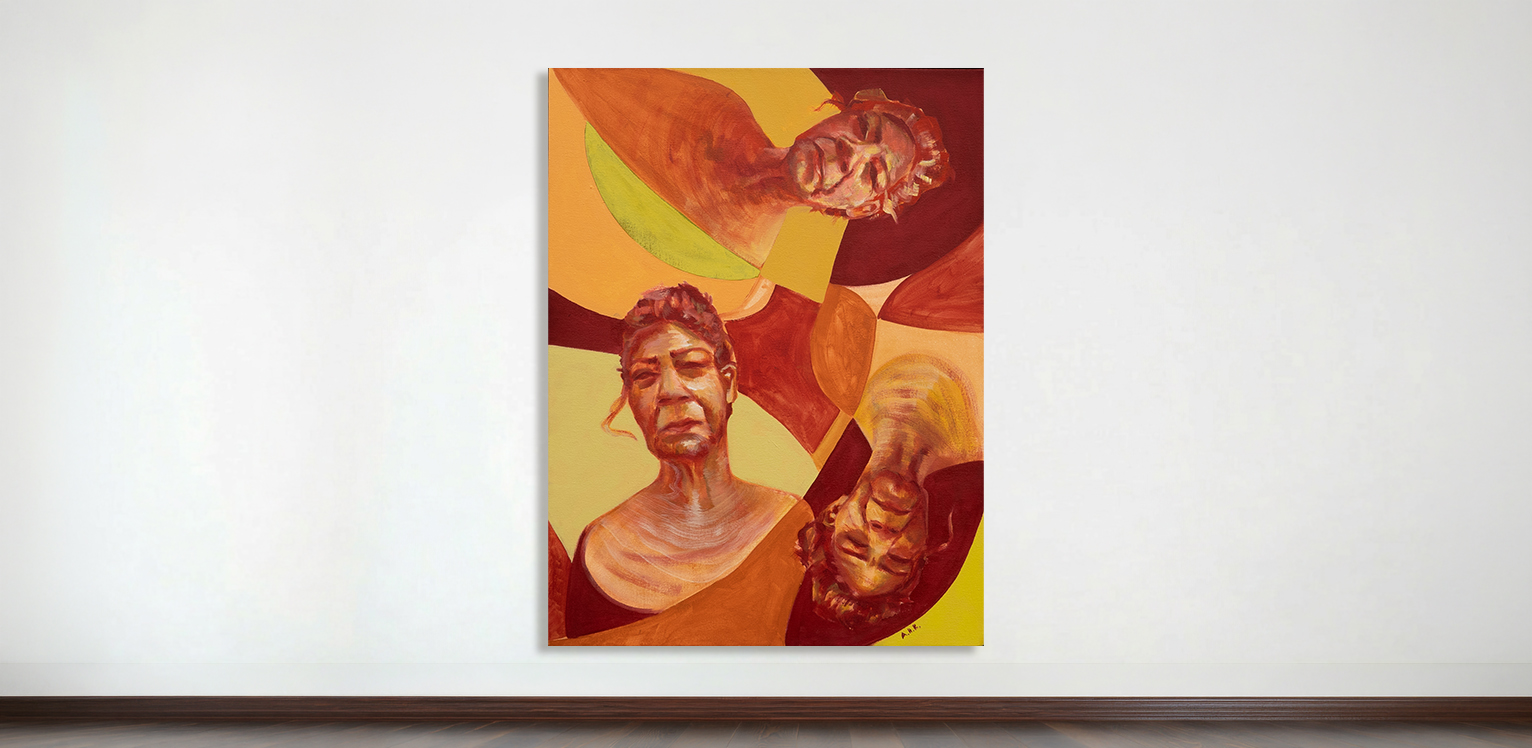
Inspired by an old family photograph, Renovación establishes an intimate link between memory, spirituality, and nature.
The work evokes a dialogue with ancestors, who emerge as guiding presences within the creative process. The background originates from a walk in the forest, where lichens—understood as symbols of union and symbiosis—became the central metaphor of the piece. This organism, formed through the coexistence of a fungus and an alga, finds a visual echo in the depiction of the artist’s grandmother and her sisters, who appear in symbiosis as a single figure orentity. The work proposes a sense of continuity and fusion, where the human and the natural intertwine within a shared spiritual body.
DescriptionPortales explores the metamorphosis of identity over time. The female figure appears fragmented into three states—past, present, and future—held in continuity and transformation, reflecting an internal evolution. The portrait is enveloped by organic forms, generating a fusion between body and environment. The skin, with a texture akin to tree bark, dissolvesinto the background, where branches emerge as an extension of the figure itself. This interplay between figure and nature reinforces notions of growth,change, and rootedness. The arches surrounding the figure function as symbolic portals—thresholds that lead to its multiple facets and temporal dimensions. The work reflects on the construction of destiny: time as the architect ofidentity, and the individual as an active agent in their own transformation. Through a fusion of figuration and abstraction, Portales invites a reconsideration of time not as a linear sequence, but as a navigable space in which each moment operates as a threshold toward what we are and what we may become.
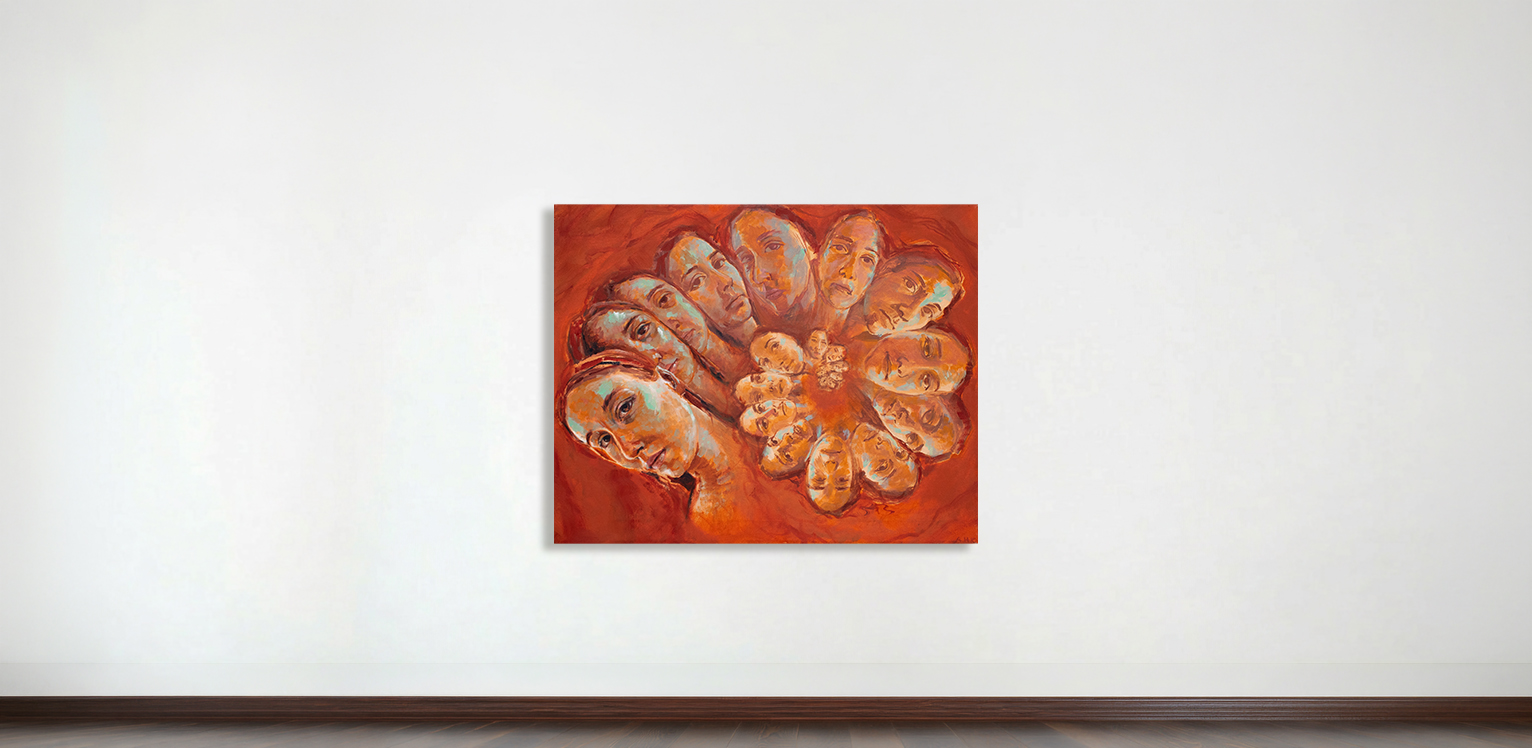
DescriptionIt stems from a reflection on the transformation of identity over time. It acknowledges the distance between who I was, who I am, and who I will become, understanding identity as a process in constant change. The work incorporates the notion of masks as constructs that are activated or removed depending on context and relationships, revealing the adaptability oft he self. The spiral functions as a symbolic structure that suggests different depths of self-knowledge and a continuous movement of internal exploration. Rather than proposing a stable ordefinitive core, the piece assumes the impossibility of accessing a fixed essence.
Instead, it puts forward the analysis and observation of its multiple layers as a means to approach a broader understanding.
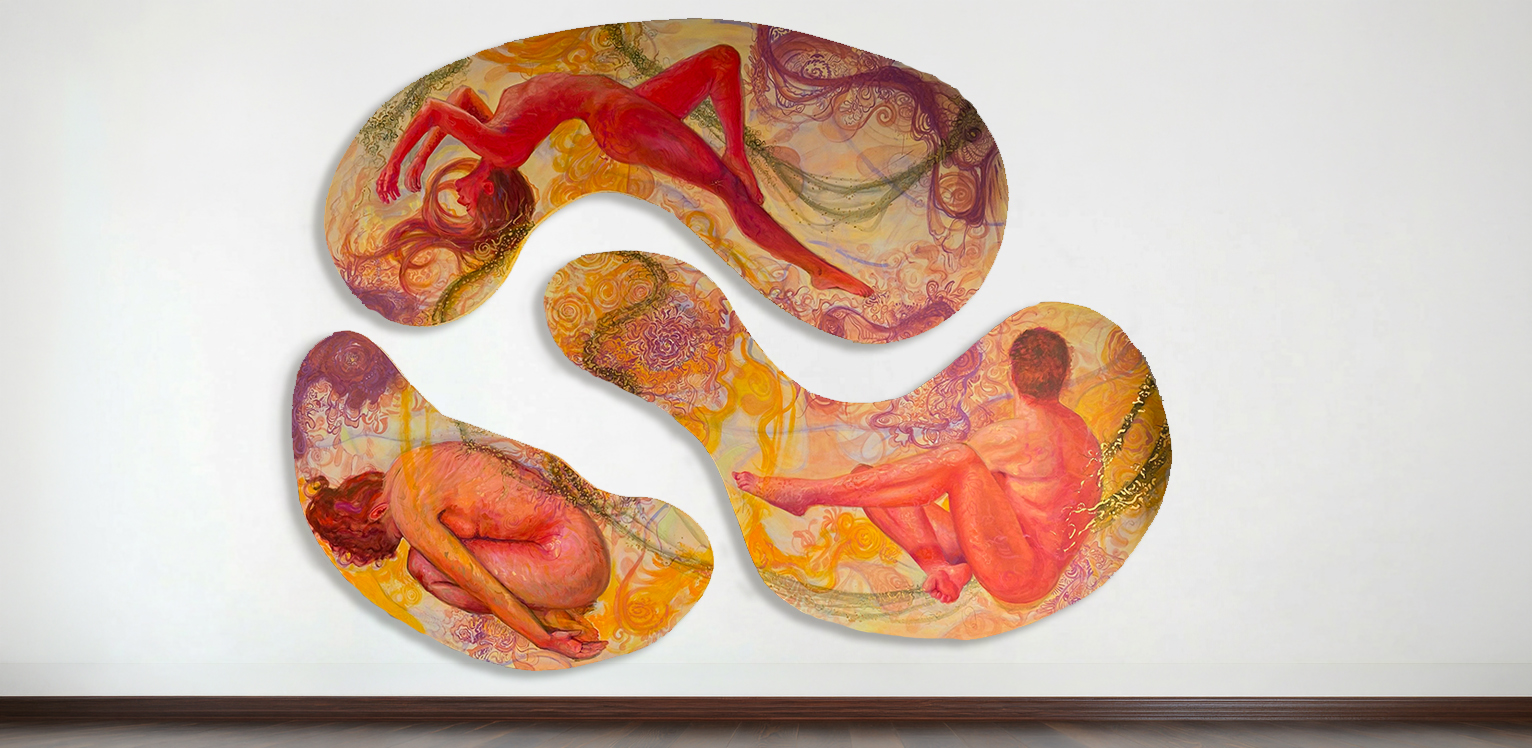
DescriptionIncubación addresses learning as an individual process that develops in constant interaction with its environment. Each subject constructs their experience from a personal perspective, yet it is shaped by the stimuli, dynamics, and presences that surround them.
The work proposes a tension between autonomy and context: while each individual defines their own process of growth and expansion, it does not occur in isolation. There is a continuous exchange of experiences and events that influence each trajectory, establishing connections between processes that may appear independent.
DescriptionInterferencia examines the recurrence of life cycles and the difficulty of interrupting them, even when they are recognized. The work operates within the tension between awareness and determination, pointing to the limits of agency in the face of persistent patterns.
Through structures that suggest repetition and return, the piece emphasizes the continuity of these processes rather than their resolution. In this sense, it does not propose an exit, but an analysis of the cycle itself: how it manifests, repeats, and asserts itself across varying conditions.
Description